Water Changes:
A weekly water change is standard, no matter tank size. Change about 20-30% of your water each time. Avoid full water changes. They will stress your betta and shock their system. If a full water change is necessary due to unsafe conditions like high ammonia or an infection like ich, you should reintroduce your betta to the tank as if you were introducing them to a brand new tank (because, for them, you are) and take the adapting steps.
Water Testing:
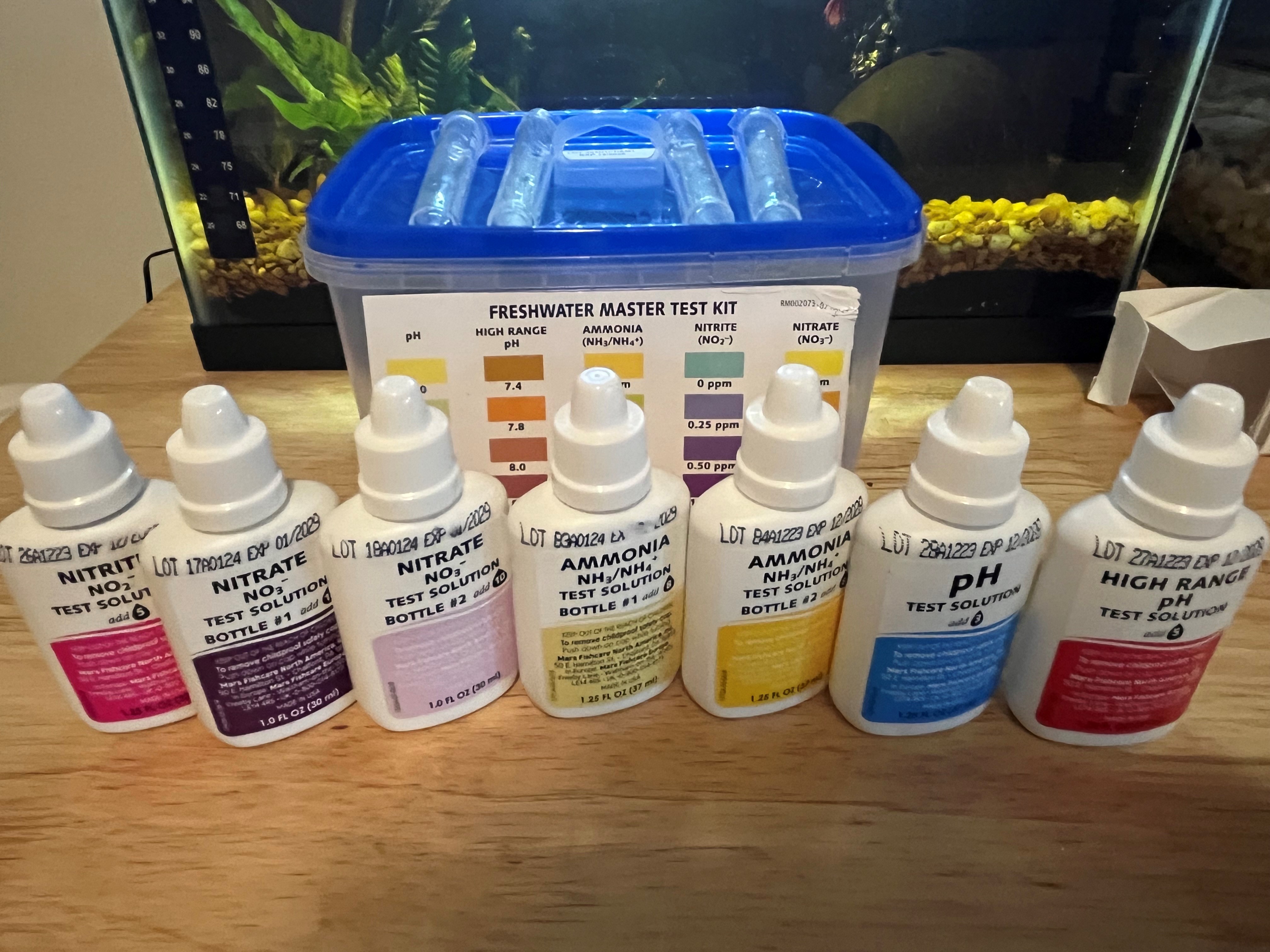
Testing is important to make sure your fish is living in good conditions. Test as often as you change your water, or if you notice sickly behaviors from your fish. Strip tests can be unreliable and hard to read, so kits that use individual liquid tests are highly recommended. An easy-to-use kit is the “API Freshwater Master Kit”, found at most Petcos and Petsmarts. This kit tests for ammonia, pH, nitrates, and nitrites. Its use is demonstrated in the video above.
Water Parameters- The Basics:
pH
Betta preferred level: 6.8-7.5
pH tells you how acidic or basic your tank water is. 0-6.9 is acidic, ranging respectively from most to least acidic. A pH of 7 is neutral (the pH of pure, undistilled water). A pH of 8.0-14 is acidic. Most fish require a pH range somewhere between 6.5-8.5.
Nitrates
Betta preferred level: 10-25 ppm
Nitrates are developed over time with the nitrogen cycle, and support beneficial bacteria growth. You want nitrates in your tank. If you do not have any nitrates in your tank, your water is not adequate for fish.
Ammonia
Betta preferred level: 0 ppm
Ammonia comes from waste or broken down excess food. Any level of ammonia above 0 ppm can be harmful for your fish. Beneficial bacteria feeds off ammonia to keep your levels at 0.
Nitrites
Betta preferred level: 0 ppm
Nitrites emerge from waste and become detectable in your tank if you have not done a water change in a while or cleaned your substrate. A nitrite spike can cause rapid algae growth.
GH
Betta preferred level: 3–4 dGH (50–66.7 ppm)
GH stands for general hardness, and measures the amount of minerals in your water. Betta fish prefer soft water. You can buy a separate, small liquid test kit to test for both GH and KH.
KH
Betta preferred level: 3–5 dKH (53.6–89.4 ppm)
KH stands for carbonate hardness. KH can influence pH, so a low KH can cause low pH and vise versa. Thus, Betta fish require a stable KH.