Bettas, especially males, are known as aggressive and territorial. Male betta fish can’t be with other betts, but did you know that female betta fish can live in groups? It’s not for beginners, but it’s a fun fact… and it got me curious as to what tank mates betta fish could be with. After a little research, I set up an observational experiment with three betta tanks, keeping everything consistent except for the tank mates to see which was best: one lone betta, one betta with snails & shrimp, and one betta with a group of tetras. I watched them for months, and this is what I learned..
Lone betta:
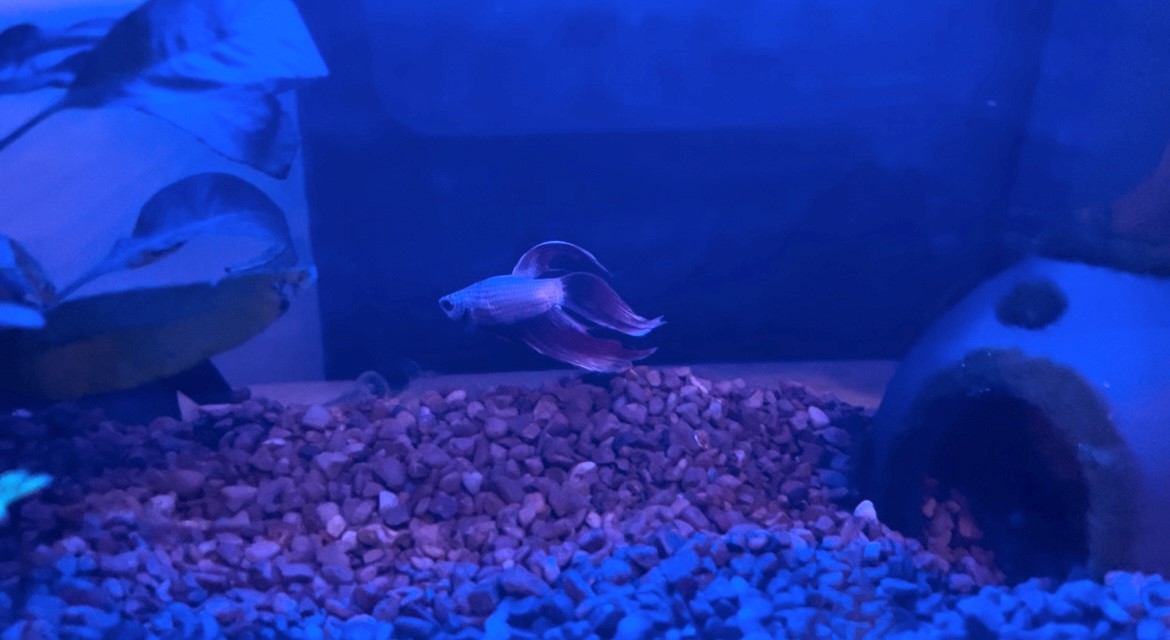
My biggest takeaway was that this is perfectly, completely, absolutely fine. This is how Betta fish are typically kept, and there’s no issue with it. Mars, the male betta I had in this tank, seemed content having space to himself. He was active from the moment I got him and is still swimming around his plants as I’m writing this.
Pros:
- No territory issues
- Avoids outside stressors
- Maximizes the space that the Betta takes for itself
- Easier to maintain one fish in a tank, especially for beginners
Cons (said lightly):
- Betta may get bored without extra enrichment (toys, additions to the tank, snails to observe, etc.)
- Maintenance is 100% up to you and your cycle. Without extra algae eaters, there’s a higher chance of algae buildup.
Betta with snails and shrimp:
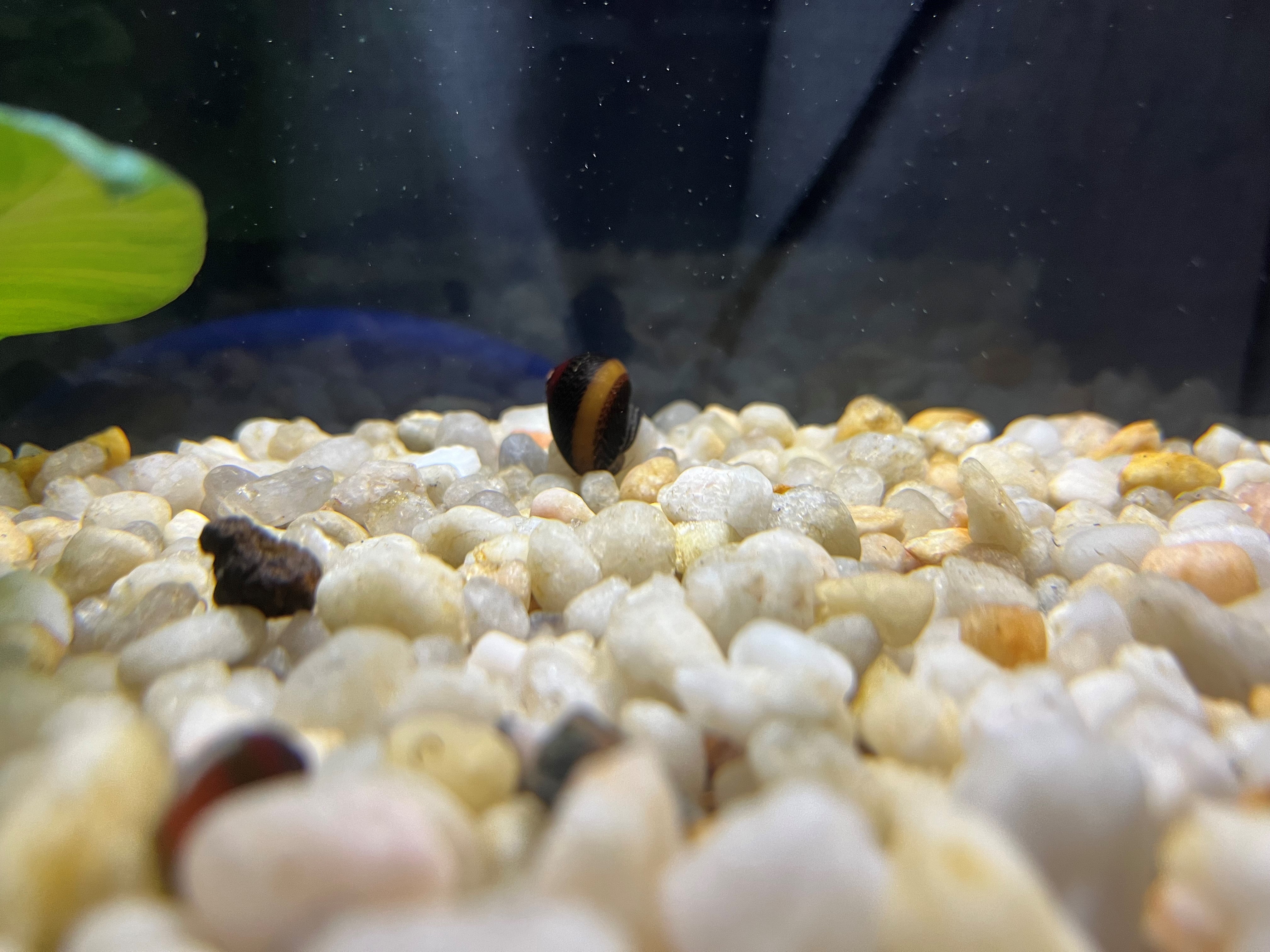
My biggest takeaway from this was that this setup is great for maintaining a clean tank and natural ecosystem. My male betta that was in this tank, Rocky, certainly earned his name by picking off the ghost shrimp not far into the experiment. However, the snails proved to be fantastic (and non-edible) tank mates.
Pros:
- Zero algae throughout the entire experiment. Both the lone betta and tetra tank had it at some point.
- Provides a more natural ecosystem
- Can be visually fun
Cons:
- Shrimp have specific needs like their own food and hiding spots that bettas can’t get into, so unless you don’t plan on keeping them for long, make sure their needs are met.
- Snails can reproduce very fast and overtake your tank.
Tetra tank:
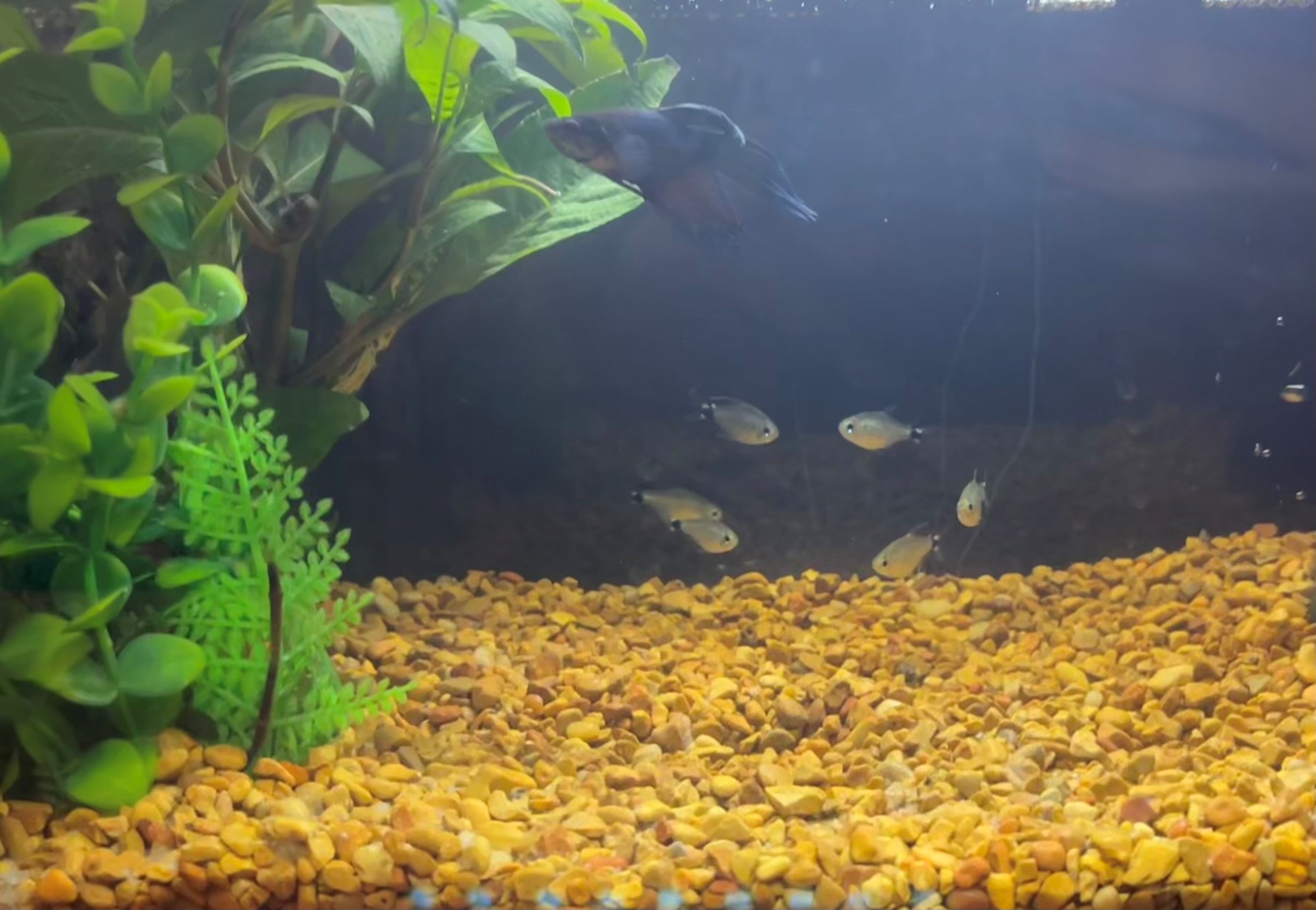
My biggest takeaway from watching and maintaining this tank was that it’s not for beginners and that the personality of your betta fish matters when it comes to compatibility. Blueberry, the male betta I had in this tank, was one of the most docile betta fish I have ever had. If Blueberry was not as docile, though, it’s more than likely that this arrangement would not have worked, and stressed all the fish out. Also, you need to combine the tank size needs of both fish.
Pros:
- Visually fun
- If done right, can create a nice community tank
- You can have more than one fish in a tank
Cons:
- Not for beginners!!
- More waste production and thus more vulnerable to algae (had a brief nitrite spike w/ this tank)
- Can stress out fish if not compatible
- Backup plan (another tank) is needed in case fish are not compatible and need to be separated.
Introducing your betta to other fish
No matter what, male betta fish cannot be with other betta fish. Female betta fish can be in a “sorority tank” (5 females) but this is absolutely not for beginners and a backup plan should be in place in case one or more of the females do not get along. In terms of general tank mates, shrimp or snails are fantastic, or dare I say ideal tank mates for betta fish, as they help with tank cleanliness and really won’t interfere much with your betta.
Tank mate requirements
Small, placid community fish can be with betta fish, but have the following suggestions/requirements:
- Slower swimmers
- Fish that tend to stay in the bottom of the tank like tetras (bettas are middle/top swimmers)
- Short fins so that the betta doesn’t nip at it
- Not too flashy so that betta isn’t drawn to them
When and how to introduce your fish to other tank mates
There are also requirements for your betta when introducing them to other fish. Betta personality matters! Bettas can range from extremely aggressive to extremely docile, and can only be with other fish if they’re docile
Your betta needs to be introduced to the tank after whatever fish you want to introduce to it. Bettas are very territorial.
- If you introduce them to the tank first they will claim the entire tank and become aggressive toward any fish attempting to enter that territory.
- But… If you introduce a betta to a new tank where there are already fish, the betta will find its own spot in the tank and acknowledge that some territory in the tank has already been claimed!
You will undoubtedly need a bigger tank size. It is simple and best to combine the tank size requirementa (for example, if your betta needs a 5 gallon minimum and your tetras need a 10 gallon minimum, to keep the tetras with a betta you will need a 15 gallon tank).
Suggestions for tank mates
Tetras, particularly ones like kitty tetras (short fins, not super multi-colored) are great tank mates for your betta. Guppies and cory catfish are also great, but keep in mind that most cories should not be in a tank with gravel, only sand or other fine substrate.
Precautions also need to be taken beforehand:
- Make sure your fish’s needed water parameters line up (example: Tetras need a temperature range of 72-82 degrees, while betta fish need 75-80 degrees, so they can find a nice middle ground of 75-80 degrees).
- In case your fish are not compatible, you need to have a backup plan, whether that be rehoming them or putting them in a separate tank.
Signs of incompatibility
- Betta chasing fish around
- Other fish nipping at the betta’s fins or vice versa
- Signs of stress from either fish. Bettas will flare their gills a lot if they are stressed
- Excess aggression